A Biblical introduction to the
Doctrine of 'the Rapture'
Almost all of Christendom has been taught and believe in a future "rapture". There are many sincere Christians who are waiting for Jesus to come again on a cloud and take them back to heaven with Him.
Many songs have been written about a “rapture”, and it is preached about in almost all Christian churches today. Books have also been written and even movies have been made about "being left behind". Even bumper stickers can be seen on cars that say, "In case of Rapture, this car will be unmanned."
The truth is that the word "rapture" is not even in the Bible. Here are some of the Scriptures which Christians base their future "rapture" belief on: Matthew 24:40-42.
Let's look at the words "taken" and "left". You may think that these two words would be used the same way that they are used today. Not so.
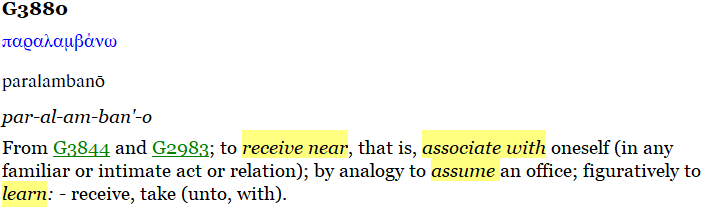
The word "taken" comes from the Greek word "paralambano" Strongs G#3880 which means "to receive near".
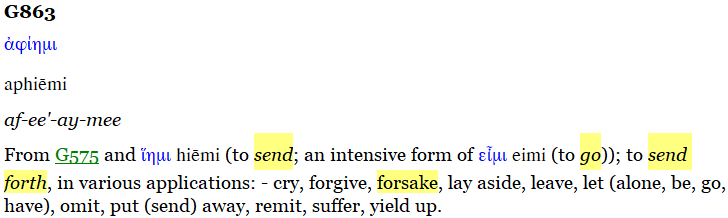
The word "left" comes from the Greek word "aphiemi" Strongs G#863 which means "To send forth or to forsake".
As you can see, the word "taken" refers to being received near, and the word "left" refers to being forsaken.
Therefore, you could paraphrase this verse as: "Two women shall be grinding at the mill; the one shall be received and the other forsaken."
These verses are actually referring to the destruction of Jerusalem in AD 70 when the Christians would be removed from harm’s way as they obeyed the instructions of Jesus to leave Jerusalem, while the disobedient ones would remain in the city to suffer at the hands of the invading armies of Rome.
In Luke 21:20-22, we read these instructions that Jesus gave to the believers about this event:
“But when you see Jerusalem surrounded by armies, then know that its desolation is near. Then let those who are in Judea flee to the mountains, let those who are in the midst of her depart, and let not those who are in the country enter her. For these are the days of vengeance, that all things which are written may be fulfilled.
Another common Scripture used to support a future "rapture" is 1 Corinthians 15:52.
First, the "we" in this verse was the Apostle Paul referring to himself and all of the others who had obeyed the Gospel of Jesus who were his contemporaries.
In other words, they were all alive when Paul said this to them. This Scripture is referring to the time in AD 70 when all the dead were resurrected and the living born-again Christians were changed to meet the Lord Jesus in the air, or in that spiritual dimension. In AD 70 was when the next verse was fulfilled: 1 Corinthians 15:53
The third most commonly used future "rapture" Scripture is 1 Thessalonians 4:17.
This verse is talking about all the souls who went to the grave before AD 70. The disciples and all those who were born again according to Acts 2:38 and who were alive would not see death but would be changed and caught away.
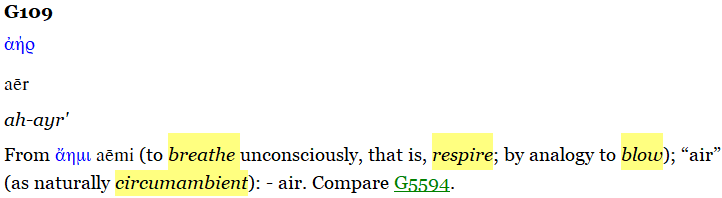
The word “air”, found in this Scripture does not refer to the sky or to the atmosphere above the tallest mountains and above the clouds. The word "air" used here comes from the Greek word "aer" which comes from the Greek verb “aemi” which means “to breathe unconsciously”. Strong’s G#109
Therefore, “aer” means “to respire, to blow air”. This Greek word “aer” is referring to the “air” that is all around us, the air that we breath.
In other words, you don’t have to leave the ground to get “caught up” in the air or in the spiritual dimension or realm with the Lord. Jesus said the Kingdom of God is within you, or a better translation is "in your midst". Luke 17:21
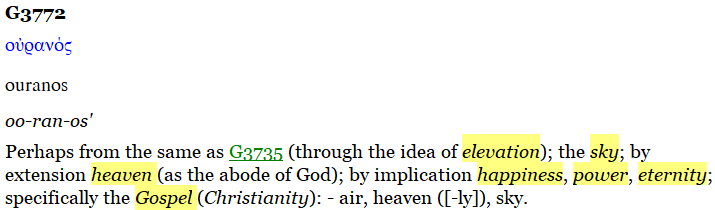
If the writer was referring to the “sky” or “atmosphere”, the Greek word “Ouranos” (Strongs G#3772) would have been used.
Again the “we” in this verse is defined by the Apostle Paul himself; “We which are alive and remain shall be caught up together with them....”
Paul was clearly referring to himself and the others who were alive and was clearly addressing them. Paul was clearly not addressing us who are alive today, some 2,000+ years later.
In other words, the “we” was them, not us.
Conclusion
The word “rapture” is not a Biblical term, but the description of a “catching away” a sudden “change” in the twinkling of an eye is clearly seen in the Scripture.
The Scripture tells us that they were expecting this experience to happen to them, and it did!