Proof that Jesus did Return in AD 70
Part 1
A great problem within the Church today is that they are proclaiming a “half-truth” faith in a world filled with competing religious and secular ideologies. Our critics say that we differ from traditional Christian beliefs and are therefore labelled “heretics”.
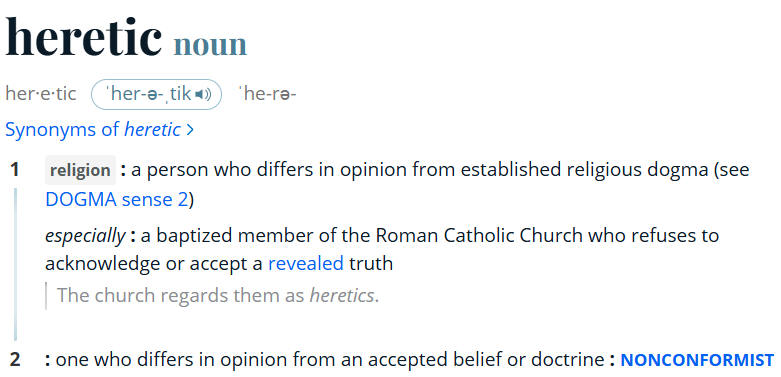
According to Merriam Webster’s Collegiate Dictionary, a heretic is a dissenter from established Church dogma. These critics do not mention, nor can they afford to admit that there is a world of difference between “established Church dogma” and the Biblical Truth of the Scriptures.
Are we heretics? As far as established Church dogma is concerned, yes, we are however, we are not “heretics” regarding Christian beliefs as revealed to us in Scripture.
We are not followers of the traditions of men which make the Word of God of no effect. You will never trust God more than when you trust His Word.
As followers of the Lord Jesus, it is our duty to continue to study God’s Word and to seek a greater understanding of what He has revealed to us. Sometimes we have to change our minds about things. If we are committed to the search of Truth, we have to be willing to review our beliefs.
Most people today, who believe in Jesus, view the second coming, the resurrection, and the judgment as events that are in the future because the Biblical account is full of seemingly literal descriptions that are linked to these events.
The most common error in understanding the Scriptures is allowing inconsistencies to exist. Such errors clearly reveal the lack of Biblical study and understanding. The aim is often in support of tradition over Scripture thereby allowing the misinterpretation of a verse to contradict other verses.
Hermeneutics is the science of interpretation. The basic rule of hermeneutics is the analogy of faith that no Scripture can negate any other Scripture.
Scripture NEVER contradicts Scripture. Honouring the context of the Scripture to the original readers is critical to proper Biblical interpretation.
Almost right is always wrong!
A half truth is worse that a lie!
To support the idea of a second coming of Jesus in our future when neither Jesus nor the Apostles spoke of it, nor is it found in the Scriptures, is to promote error.
There are many people today that hold to this idea because of a lifetime of doctrinal conditioning and not because of doctrines derived from personal Bible study. This is a classic case of man-made tradition nullifying God’s Word and making it have no effect in our lives. We are to be governed by Scripture which is the inspired Word of Truth.
Remember, when there is confusion, it is because traditions seek to alter the original meaning. A Bible that can mean anything is a Bible that has no meaning.
The Scriptures prove that these three events:
1. The second coming of Jesus,
2. The resurrection, and
3. The judgment were all confined to the first century.
The prophetic and figurative descriptions of these events are spiritual in nature. We can readily prove this by comparing Scripture with Scripture.
In Romans 13:11-12, we read how “the day is at hand”.
In 1 Corinthians 7:29,31, we read that “the time is short” and “the form of this world is passing away”.
1 Corinthians 10:11 goes as far as to say that “the ends of the ages have come”.
Philippians 4:5 says that “the Lord is at hand”.
James 5:8-9 tells us that “the coming of the Lord is at hand” and “the judge is standing at the door.”
1 Peter 4:7 says “the end of all things is at hand.”
1 John 2:18 declares that “it is the last hour” and that there were many antichrists that existed back in that first century.
1 Peter 4:17 says “the time has come for judgment must begin at the house of God”.
Hebrews 10:37 says that “He will not tarry”.
There are many more like statements throughout the New Testament we have just cited a few.
The apparent failure of these prophecies to come true has led to scepticism about the reliability of the Bible and the deity of the Lord Jesus Christ.
Past fulfilment solves this problem by maintaining that these prophecies were, in fact, fulfilled and have a first century application and fulfilment.
Remember, paramount faith is the faith that is founded on Scripture, no matter who or what condition or circumstance. Matthew 22:29, Revelation 21:5
For nearly 2,000 years, the vast majority of Churches today are still waiting eagerly expecting and still proclaiming the soon and any moment return of Jesus Christ back into this world.
While holding fast to this view, they struggle with the dilemma of non-occurrence while trying to maintain the pretence of inerrancy, infallibility, and divine inspiration of the Scripture.
On the other hand, many Bible scholars are forced to now say that Jesus has delayed or even postponed His second coming. They conclude that Jesus and the New Testament writers were simply mistaken or deluded.
There are some people that even think that Jesus never made certain time-restricted statements in Scripture, but that some of these words were altered or later added by His followers.
Such conclusions spread like a cancer and open the door to question the authenticity of many other things Jesus said. Even the question of Bible inerrancy comes into question.
Most Christians don’t seem to realize the predicament we are in if Jesus has not come in the time parameters, He Himself specified. The strongest possible evidence remains with Jesus’ own words.
He Himself mentions several time statements regarding His return. He did not leave any doubts; His words were clear and concise. They were not conditional. He did not say “maybe” or “possibly” or “someday” or in 2,000 years or even in 10,000 years.
Jesus spoke in a plain straightforward manner to the ordinary people of His day. His words are some of the clearest in the New Testament if we take them at face value. If we try to make them mean something else other than what He said, it all becomes very confusing.
As we read through these next few verses, ask yourself, if you had been living in that first century, how would you have understood concerning the time of the return of Jesus?
Matthew 10:23- these words of Jesus had to be fulfilled before Israel ceased to exist as a nation in AD 70.
Matthew 16:27-28 – Jesus describes His return with a definite timeframe limitation. A 40-year period was to transpire between His ascension to heaven and His coming back in His Kingdom which He said that some of those He addressed that day would live to see.
Matthew 24:3, 27, 30, 34 – Jesus linked His coming back to the destruction of the Temple. He said His coming was inseparable from “All these things…”
Matthew 23:35-36 When speaking of the Scribes and Pharisees shedding righteous blood, He said that judgment would come on “this generation”.
In all 17 other verses in the New Testament, this phrase is consistent in its meaning. Jesus was speaking of and to His contemporaries, not to some unborn generation thousands of years in the future.
Matthew 26:64– Jesus spoke directly to Caiaphas, the High Priest, and to those who were with Him. He told them that THEY would see His return in catastrophic judgment.
John 21:22 – Here Jesus suggests that John would or could be alive when He returned.
Every New Testament writer and early Church believer and even unbelieving Jews NEVER imagined that Jesus might be referring to a distant 2,000-year return.