Identifying "This Generation"
In this study we will seek to identify the generation being spoken of when Jesus used the words, “this generation” in the Olivet discourse and the numerous other references in the gospels and the New Testament.
Why is it important to identify and understand this phrase?
As we will see, the use of the phrase “this generation” is a time statement, used to pinpoint an exact period of time in which specific events were to transpire.
Scripture shows that the “this generation”, mentioned fifteen times by Jesus, was always referring to His contemporary generation living at the time He spoke these words to them and not some other future generation.
Isaiah 53:7-8, 7 He was oppressed and He was afflicted, Yet He opened not His mouth; He was led as a lamb to the slaughter, And as a sheep before its shearers is silent, So He opened not His mouth. 8 He was taken from prison and from judgment, And who will declare His generation? For He was cut off from the land of the living; For the transgressions of My people He was stricken.
The generation that Jesus was on the earth physically, was the “this generation” that we find spoken of in the New Testament Scriptures.
The Olivet Discourse: resulted from a statement Jesus made concerning the buildings of the temple.
Matthew 24:1-2, Then Jesus went out and departed from the temple, and His disciples came up to show Him the buildings of the temple. And Jesus said to them, “Do you not see all these things? Assuredly, I say to you, not one stone shall be left here upon another, that shall not be thrown down.”
This statement provoked the disciples to further ask the question:
Matthew 24:3 Now as He sat on the Mount of Olives, the disciples came to Him privately, saying, “Tell us, when will these things be? And what will be the sign of Your coming, and of the end of the age?”
In the King James Version of the bible it has the word 'WORLD' in the above verse however the correct word rendered in the New King James Version as well as other modern translations have rendered to correct word 'AGE'.
In all three gospel accounts of the Olivet Discourse, Jesus began with a warning, “Take heed that no man deceive you.”
Deceive you about what?
Deceive you about the sign of His coming, and the end of the age.
Matthew 24:6 And you will hear of wars and rumors of wars: see that ye be not troubled: for all these things must come to pass, but the end is not yet.
Matthew 24:10-11 and then many will be offended, will betray one another, and will hate one another. Then many false prophets will rise up and deceive many.
Matthew 24:14 and this gospel of the kingdom will be preached in all the world as a witness to all the nations; and then the end will come.
While we are here, I’d like to ask the question, was the gospel preached in all the world?
What does the Bible say?
Romans 1:8 First, I thank my God through Jesus Christ for you all, that your faith is spoken of throughout the whole world.
Romans 10:17-18 So then faith cometh by hearing, and hearing by the word of God. 18 But I say, have they not heard? Yes verily, their sound went into all the earth, and their words unto the ends of the world.
Romans 16:25-26, 25 Now to him that is of power to stablish you according to my gospel, and the preaching of Jesus Christ, according to the revelation of the mystery, which was kept secret since the world began, 26 but now is made manifest, and by the scriptures of the prophets, according to the commandment of the everlasting God, made known to all nations for the obedience of faith:
Colossians 1:5-6, 5 For the hope which is laid up for you in heaven, whereof ye heard before in the word of the truth of the gospel; 6 Which is come unto you, as it is in all the world; and bringeth forth fruit, as it doth also in you, since the day ye heard of it, and knew the grace of God in truth:
Colossians 1:23 If ye continue in the faith grounded and settled, and be not moved away from the hope of the gospel, which ye have heard, and which was preached to every creature which is under heaven; whereof I Paul am made a minister.
According to the scriptures, the gospel was preached throughout the entire world, the entire Roman world of the first century. Matthew 24:14 said that after the gospel was preached in all the world for a witness unto all nations, the end would come.
Matthew 24:15 When ye therefore shall see the abomination of desolation, spoken of by Daniel the prophet, stand in the holy place, (whoso readeth, let him understand:)
The abomination of desolation is described in (Luke 21:20) “and when ye shall see Jerusalem compassed with armies, then know that the desolation thereof is nigh”.
The abomination of desolation was the gentile armies in the holy land.
Matthew 24:16 Then let them which be in Judaea flee into the mountains:
Matthew 24:21 for then shall be great tribulation, such as was not since the beginning of the world to this time, no, nor ever shall be.
Luke 21:22 For these be the days of vengeance, that all things which are written may be fulfilled.
Matthew 24:29 Immediately after the tribulation of those days shall the sun be darkened, and the moon shall not give her light, and the stars shall fall from heaven, and the powers of the heavens shall be shaken.
This is the use of apocalyptic language, speaking figuratively NOT literally.
Matthew 24:30 and then shall appear the sign of the Son of man in heaven: and then shall all the tribes of the earth mourn, and they shall see the Son of man coming in the clouds of heaven with power and great glory.
Matthew 24:31 And he shall send his angels with a great sound of a trumpet, and they shall gather together his elect from the four winds, from one end of heaven to the other.
Matthew 24:33 So likewise ye, when ye shall see all these things, know that it is near, even at the doors.
Matthew 24:34 Verily I say unto you, this generation shall not pass, till all these things be fulfilled.
When it says, all these things be fulfilled, how many of these events described prior to Matthew 24:34 does the word “all” include?
Mark 13:30 Verily I say unto you, that this generation shall not pass, till all these things are done.
Luke 21:32 Verily I say unto you, this generation shall not pass away, till all be fulfilled.
Jesus answered the questions the disciples asked in:
Matthew 24:3, “tell us, when shall these things be? And what shall be the sign of thy coming and the end of the world (Age)?”
The what, were all the events or signs spoken of in Matthew 24 from verses 6-31, and the when, was given in verse 34, “this generation shall not pass, till all these things be fulfilled.”
Meaning all these events of the Olivet Discourse that we today recognize as the end time events leading up to the return of Jesus, would have to be fulfilled before that first century generation ended.
If one holds the futuristic view of the Lord’s return, they must say that the “this generation” used in Matthew 24:34 will be the generation present whenever these events finally happen in the future. There is no other way to make sense of the “this generation” time statement and hold to the futuristic viewpoint.
But that is not the context given in scripture and that is not how Jesus used the words “this generation”.
The use of “this generation”, is a time statement pointing to the then present first century generation of those to whom Jesus was directly speaking to.
This is not the only time Jesus used the phrase, “this generation”. Fifteen times Jesus used, “this generation” in the New Testament, and in every case the context is plainly given as the generation of people to whom He was directly speaking to.
He was always referring to His own contemporary generation.
Hebrews 9:26 He then would have had to suffer often since the foundation of the world; but now, once at the end of the ages, He has appeared to put away sin by the sacrifice of Himself.
This verse states that the generation Jesus appeared in was the generation at the end of the world, the last generation was not to be some distant future generation, Jesus appeared at the end of the world, the generation of Jesus was the last generation of the Old Testament.
Let’s look at the use of the words “this generation” in the gospels.
Beginning with Matthew 11:16-19, 16 But whereunto shall I liken this generation? It is like unto children sitting in the markets, and calling unto their fellows, 17 and saying, we have piped unto you, and ye have not danced; we have mourned unto you, and ye have not lamented. 18 For John came neither eating nor drinking, and they say, He hath a devil. 19 The Son of man came eating and drinking, and they say, Behold a man gluttonous, and a winebibber, a friend of publicans and sinners. But wisdom is justified of her children.
Here the context identifies “this generation” as the generation living when both John the Baptist, and the Son of Man (Jesus), came preaching the Kingdom of God to the nation of Israel.
Matthew 12:39-41, 39 But he answered and said unto them, An evil and adulterous generation seeketh after a sign; and there shall no sign be given to it, but the sign of the prophet Jonas: 40 For as Jonas was three days and three nights in the whale's belly; so shall the Son of man be three days and three nights in the heart of the earth. 41 The men of Nineveh shall rise in judgment with this generation and shall condemn it: because they repented at the preaching of Jonas; and behold, a greater than Jonas is here.
In what generation was there a greater than Jonah here?
In what generation was the Son of Man three days and three nights in the heart of the earth?
It was the generation living when these events took place in the first century.
Matthew 12:42 The queen of the south shall rise up in the judgment with this generation and shall condemn it: for she came from the uttermost parts of the earth to hear the wisdom of Solomon; and behold, a greater than Solomon is here.
In what generation was there present a greater than Solomon?
We know that Jesus is referring to Himself as the one greater than Solomon. “This generation” is tied to the generation that a greater than Solomon was present.
Luke 11: 50-51, 50 That the blood of all the prophets, which was shed from the foundation of the world, may be required of this generation; 51 from the blood of Abel unto the blood of Zacharias, which perished between the altar and the temple: verily I say unto you, it shall be required of this generation.
The context is clear; Jesus was speaking directly to the scribes, Pharisees, and lawyers that were attempting to provoke Him. Jesus was speaking of His immediate generation.
Luke 17:24-25, 24 For as the lightning that lighteneth out of the one part under heaven shineth unto the other part under heaven; so shall also the Son of Man be in his day. 25 But first must he suffer many things and be rejected of this generation.
In which generation did the Son of Man suffer those many things?
There was only one generation that Jesus was rejected and suffered.
John 1:11 He came unto his own, and his own received him not.
Jesus is speaking of His generation.
Clearly, we have shown a biblical precedent that interprets the phrase “this generation” to mean the current, present generation that was being addressed and not some other generation of past or future existence.
Precedent – an earlier event or action that is regarded as an example or guide to be considered in subsequent similar circumstances. In a legal sense, a precedent is a previous case or legal decision that may be or must be followed in subsequent similar cases.
Therefore, the precedent is to be followed unless there is an immediate context that clearly shows a change to the meaning. Let’s look at an example of an exception to the established precedent of this generation.
Psalms 95:8-11, 8 Harden not your heart, as in the provocation, and as in the day of temptation in the wilderness: 9 When your fathers tempted me, proved me, and saw my work. 10 Forty years long was I grieved with this generation, and said, it is a people that do err in their heart, and they have not known my ways: 11Unto whom I sware in my wrath that they should not enter into my rest.
Here is a use of the phrase “this generation” that we can accurately reason to mean a different generation not living at the time this scripture was inspired and recorded.
We know this to be speaking of people belonging to the generation that God brought out of Egypt, who perished in the wilderness because of unbelief.
Numbers 14:26-30, 26 And the LORD spake unto Moses and unto Aaron, saying, 27 how long shall I bear with this evil congregation, which murmur against me? I have heard the murmurings of the children of Israel, which they murmur against me. 28 Say unto them, As truly as I live, saith the LORD, as ye have spoken in mine ears, so will I do to you: 29 Your carcasses shall fall in this wilderness; and all that were numbered of you, according to your whole number, from twenty years old and upward, which have murmured against me, 30 doubtless ye shall not come into the land, concerning which I swear to make you dwell therein, save Caleb the son of Jephunneh, and Joshua the son of Nun.
Numbers 32:13 And the LORD'S anger was kindled against Israel, and he made them wander in the wilderness forty years, until all the generation, that had done evil in the sight of the LORD, was consumed.
We also read in:
Hebrews 3:8-11, 8 Harden not your hearts, as in the provocation, in the day of temptation in the wilderness: 9 When your fathers tempted me, proved me, and saw my works forty years. 10 Wherefore I was grieved with that generation, and said, they do alway err in their heart; and they have not known my ways. 11 So, I sware in my wrath, they shall not enter into my rest.
The writer of Hebrews was comparing the unbelief of those Christians apostatizing in the first century generation, with the unbelief of the children of Israel in the wilderness wanderings.
The use of the pronoun “that” generation is pointing to a different generation separate from the generation of the author.
Looking back to Matthew 24:34
Matthew 24:34 Verily I say unto you, this generation shall not pass, till all these things be fulfilled.
We can read no immediate context that would alter “this generation” to mean anything other than the group of people living at the time Jesus spoke these words.
This interpretation is further strengthened by the context of the conversation that was taking place between Jesus and His disciples. Jesus was answering the disciple’s direct questions, Matthew 24:3 “tell us, when shall these things be? And what shall be the sign of thy coming and the end of the age world (age)?
If the time of the Lord’s return was to be thousands of years in the future, why would Jesus use pronouns like ye, you, and this; instead of using they, them, and that?
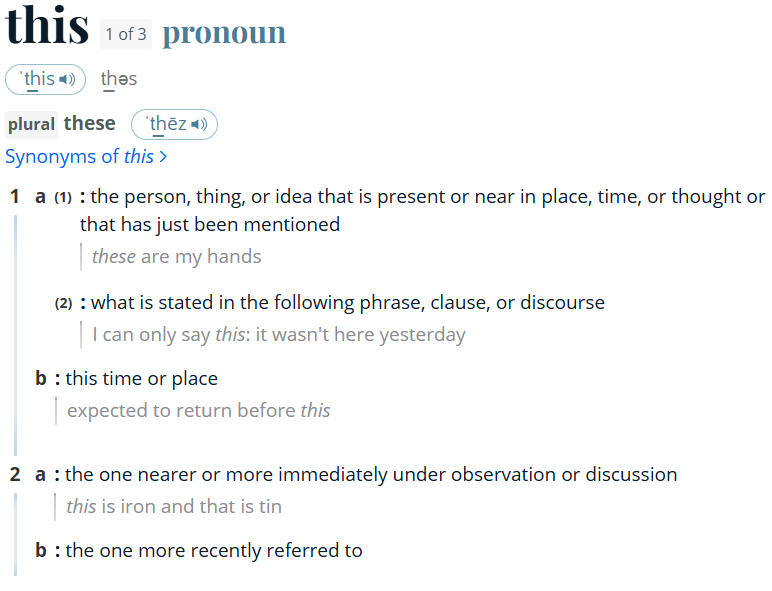
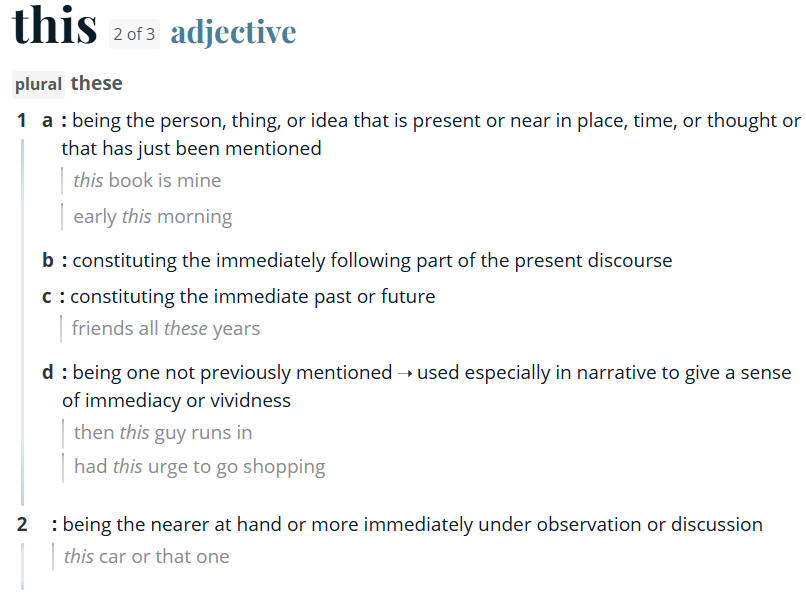
By definition, the pronoun “this” is used to identify a specific person or thing close at hand in time or space. It’s not a word used to indicate any distant time, place or future event.
The above is from Merriam-Webster Dictionary online
It is plain to see that Jesus was speaking to His contemporary generation about events that were to happen during their lifetime.
The only reason someone would wrestle with this interpretation is because their futuristic view of the Lord’s return will not allow them to accept a past fulfilment.
Because they falsely hold that the return of Christ is in the future, they ignore the plain meaning of Scripture and make presuppositions with the text based on their preunderstanding.
They have already made up their minds and read into the text their desired interpretation, rather than allowing the Word of God to speak freely and accept the interpretation inspired from the scriptures exegetically.
Which is better?
To endure a little chastening and humble yourself to admit to your error so that you might be made free?, or
to continue in error, believing and repeating a lie?
Revelation 22:15 Blessed are they that do his commandments that they may have right to the tree of life and may enter in through the gates into the city. For without are dogs, and sorcerers, and whoremongers, and murderers, and idolaters, and whosoever loveth and maketh a lie.
We encourage you to “study these scriptures and to prove yourself a workman that needeth not to be ashamed”. 2 Timothy 2:15
May God bless your faithful study of His Word.