
| HOME | ABOUT US | TEACHINGS | VIDEOS | STUDY TOOLS | CONTACT US |
How we got the Name Jesus
A brief but thorough presentation on a misinformed subject

Let us start of this article by reading the following verses: Luke 23:38, John 19:19-20
We can see that above his cross was written including his name in the languages of Hebrew (Aramaic), Greek and Latin.
How did we get to Jesus from his Hebrew name Yahoshua? Some say Yahushua or Yahusha or his Aramaic name Yeshua?
Well, it all has to do with the Greek language.
And what’s interesting is the Septuagint which was a Greek translation of the Hebrew Old Testament known as the Tanak rendered the name for Joshua as Iesous three hundred years before Messiah walked the earth.
The Septuagint, the earliest extant Greek translation of the Old Testament from the original Hebrew. The Septuagint was presumably made for the Jewish community in Egypt when Greek was the common language throughout the region.
Analysis of the language has established that the Torah, or Pentateuch (the first five books of the Old Testament), was translated near the middle of the 3rd century BC and that the rest of the Old Testament was translated in the 2nd century BC.
For a more indepth look into the Septuigant please see: About Septuigant
In the Septuagint when the name Yahoshua (Joshua) was translated by Scribes into Greek they translated it as Iesous but the question is why?
Well in Greek there is no letter
‘Y’ so they used the letter
‘I’ for the same
sound.
In Greek there’s no ‘H’
or equivalent so that letter was dropped.
In Greek there’s no ‘SH’
sound so instead they used an ‘S’
sound and also in Greek male names end with the
‘S’ sound. And
so, you come to Iesous.
If you read the King James Version of the Bible you will notice the names Jeremiah is Jeremias, Elijah is Elias and Isaiah is Esaias etc.
So how do we get to Jesus from Iesous?
Well, there is a language in between Greek and English which is the
language of Latin, it was translated into Latin before English.
And so in Latin Iesous was written like this:
Iesus it sounded the
same way.
In Latin the letter ‘I’
made the ‘Y’
sound.
Eventually around the 4th Century there became another way to write the letter ‘I’ in Latin and that is what we would recognise as a ‘J’ but it wasn’t until the 1500’s when it started making a separate sound. The ‘J’ sound as we know it today.
And so thats how you get to Jesus from his Hebrew name Yahuhsa,
Yehoshua, Yeshua etc.
So whats with the 'J' then?
The letter J is relatively recent, and originated as a variant of the letter I. Why that happens is a little complicated, and requires unpacking some assumptions in many peoples question with regards to the letter 'J'.
In the original languages (Latin, Greek, Hebrew) which provide us with the names Jesus, Joseph, Jerusalem, etc., the sound which we write as J was pronounced as the English letter Y. (Just to make things confusing for English speakers, the phonetic symbol for this sound is [ j ].) In Latin, the letter for this was I/i, in Greek it was Ι/ι (iota), and in Hebrew it was י (yod). Thus, the Greek spelling for "Jesus" was Ιησους, pronounced something like "Yeh-SOOS", and the Latin likewise was Iesus.
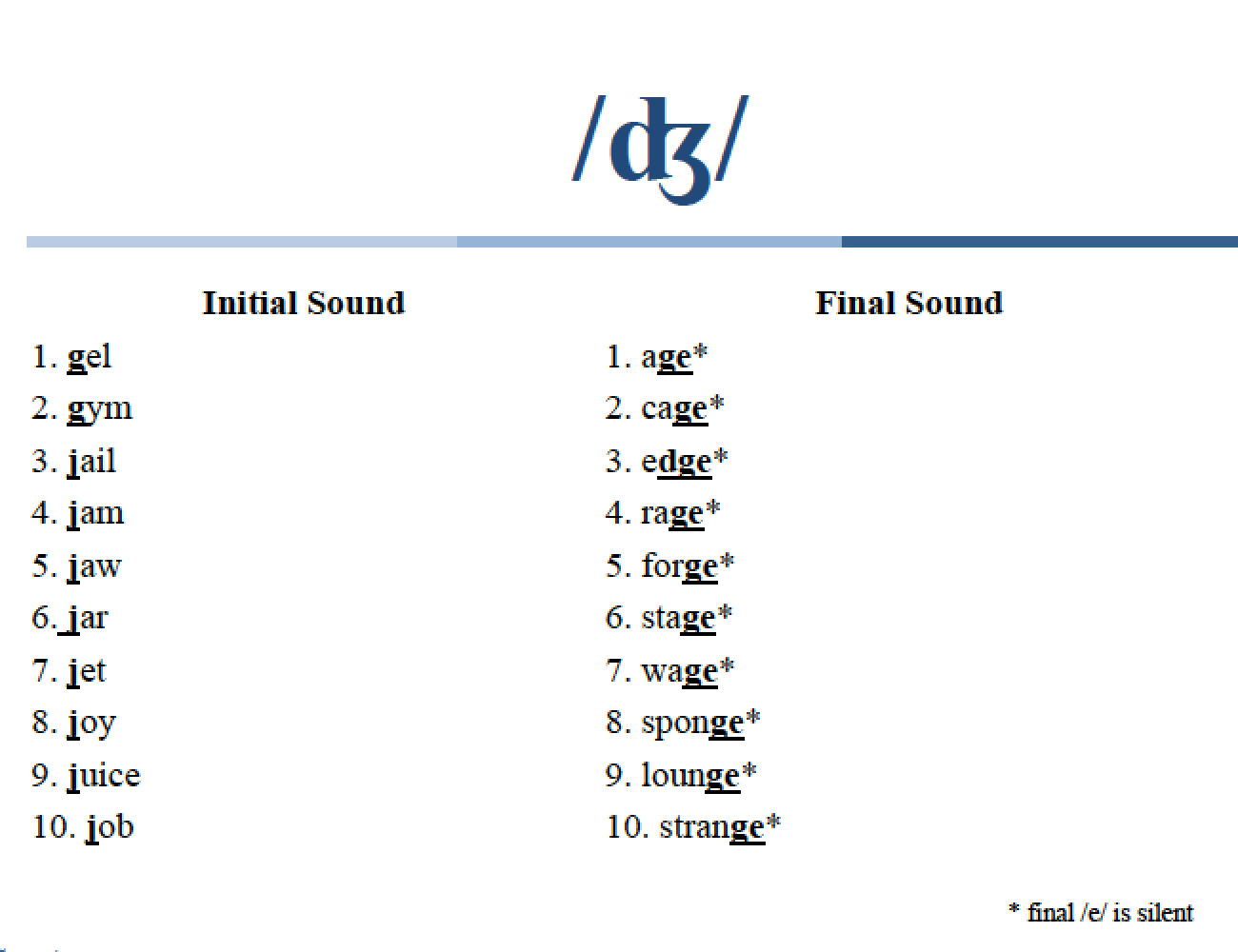
Subsequently, in the Latin alphabet the letter J was developed as a variant of I, and this distinction was later used to distinguish the consonantal "y" sound [ j ] from the vocalic "i" sound [ i ]. However, at about the same time there was a sound change in many of the languages of Western Europe, such that the "y" sound changed into a "j" sound ( [ dʒ ], or sometimes [ ʒ ] ).
So we have it that in English, the letter J now represents a consonant [ dʒ ] which is not obviously similar to the vowel [ i ], despite the fact that they descend from the same letter and the same sound. (English also has many [ dʒ ] sounds spelled with J which come from native Germanic roots.)
You can see this history worked out differently in the spelling
systems of German and many of the Slavic languages of Eastern
Europe, where the letter J spells the
"y" sound
[ j ],
and the letter Y, if used at all, is primarily used as a vowel.
I hope that this article will clear up any misunderstanding with regards to Messiahs Name.
Please help support this Ministry by donating

Scan QR Code to donate now or