The '1000 Years' or Revelation Chapter 20
There is no doubt that most Christians in our world today have been conditioned by preaching and teaching that the “Millennial Reign” of Jesus is in our very near future. This “Millennial Reign” is depicted to be when Jesus returns to the earth and establishes Himself as King in Jerusalem.
This “Millennial Reign” is a time of peace and tranquillity during which Satan is bound. It has been taught to be a literal 1,000-year period in which righteousness prevails. The question is, could this “Millennial Reign” be something totally different than what the majority of Christians have been taught to believe today?
The only place that we can turn to for answers is the Bible.
The first, rather obvious observation is that the word “Millennial” never even appears in the Bible. Another spectacular fact is that during His earthly ministry, Jesus never mentioned anything about His physical return to establish Himself as King in Jerusalem where He will reign for 1,000 years.
A 1,000-year physical reign in Jerusalem, characterized by peace and righteousness, seems like no small thing. Why didn’t Jesus even mention it one time?
As a matter of fact, Jesus said just the opposite about His Kingdom. The Pharisees asked Jesus when the Kingdom of God would come. (Luke 17:20-21)
This would have been a perfect time to answer with a complete detailed description of His future victorious “Millennial Reign” that would be coming on the Earth.
Instead, the answer that Jesus gives is just the opposite. Jesus replied, “…The Kingdom of God cometh not with observation….behold the Kingdom of God is within you.”
Jesus answered Pilate with a similar answer in John 18:36, “Jesus answered, my kingdom is not of this world….”
Also, the writers of all of the Gospels and of the Epistles of the New Testament never mentioned this “Millennial Reign” nor did the disciples teach it anywhere they went.
Such an important victorious “Millennial Reign” of Jesus Christ surely would have been shouted from the mountain tops by the Apostles, but none of them mentioned one word about it.
Paul echoed the same message that Jesus spoke regarding the nature of the Kingdom of God. The Apostle Paul wrote in Romans 14:17, “For the Kingdom of God is not meat and drink; but righteousness, and peace, and joy in the Holy Ghost.”
The only place where a 1,000-year reign is mentioned is in the Book of Revelation by the Apostle John. (Revelation 20:2-4,7) As we all know, the Book of Revelation is full of vivid, symbolic, apocalyptic, figurative language.
The above facts will provoke us to take a closer look at the Greek word for one thousand. The Greek word used here for “1,000 years” is “chilioi estos” which is translated 1,000 years. The Greek word “chilioi” is in the plural form. When used in this plural form, it means “an uncertain affinity”. (Strongs G#5507)
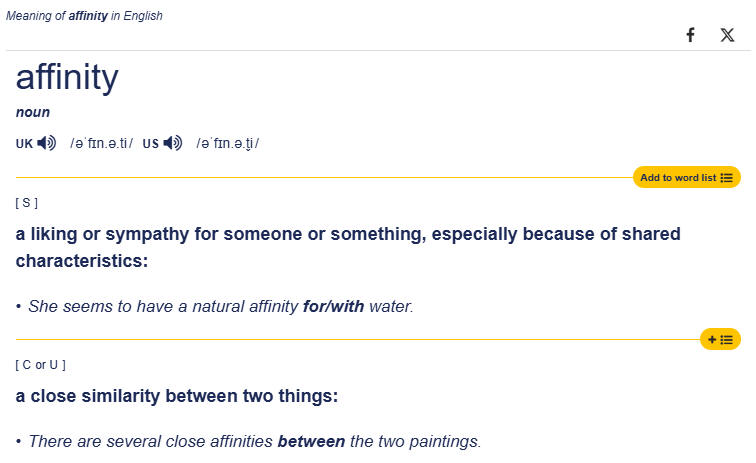
The word “affinity” is defined as “a close similarity between two things”. (Cambridge Dictionary) Now we have coupled the word “affinity” with the word “uncertain”.
When we put these two words together, “uncertain affinity” we get a “undetermined or unsure similarity” or an “undefined, similarity to 1,000” or “an undefined period of time”. So according to this Greek definition, we can entertain the fact that “1,000 years” does not necessarily mean a literal 1,000-year period.
The next point that we want to consider: are there any examples in the Bible where the number “1,000” is used figuratively? The answer is “yes”. Although “1,000” appears hundreds of times in an obviously pure quantitative sense, we can also find examples where “1,000” is used figuratively.
One example is in Psalms 50:10, “For every beast of the forest is mine, and the cattle upon a thousand hills.”
Here we can see the figurative use of the word “1,000”. If the Lord owns the cattle on a thousand hills, then who owns the rest of them?
Another example of this figurative use of “1,000” can be found in Psalms 105:8, “He hath remembered his covenant forever, the word which he commanded to a thousand generations.”
Here we understand that forever lasts more than 1,000 generations. A generation is defined by all people born and living at about the same time. (Oxford Dictionary)
Even if we were to take the “1,000 generations” literally; if we assume one generation equals 40 years, 1,000 generations would be equal to 40,000 years. So much for the “end of the world being any time soon” theory.
Another example of the figurative use of “thousands” can be found in Exodus 20:6, “And shewing mercy unto thousands of them that love me, and keep my commandments.”
No literal number is actually implied, but rather a qualitative meaning is implied. Another example of this is found in Psalms 3:6. It is not a literal number of ten thousands that the Lord can protect us from; but He can protect us from everyone. This same concept can also be found in Jeremiah 32:18. Again, the word “thousands” is not a literal number.
It is also important to note that early Hebrew writers showed a tendency to use numbers to communicate ideas. When used this way, the numbers take on a qualitative meaning rather than a quantitative meaning. This is illustrated in the Scriptural examples that we have previously cited. Why certain numbers took on this meaning is unknown because there was little record keeping outside of the Bible during this time.
Other early cultures also used certain numbers to denote ideas and concepts. The Apostle John was no exception. Our subject deals with the number “1,000”. According to early cultures, including the Hebrew culture, the number “1,000” denotes wholeness or completeness in regards to perfection.
In other words, the “1,000-year” period was the period of time to perfect the church before the catching away commonly referred to today as the rapture.
In an attempt to explain away both the delay in the return of Jesus and to negate the immanency of the Book of Revelation, advocates of Futurism often use 2 Peter 3:8.
Defenders of a future “Millennial Reign” of Christ on Earth use “the thousand years as one day and one day is as thousand years” as God’s way of saying 2,000 years is a “short time”.
It is truly dangerous to imply that God does not know how to communicate with His own creation. God’s ability to communicate with man is what is called into question here. This reflects on the nature of God Himself. God is the one who created the sun and moon to keep time. God created time and God knows how to tell time. Why would God even provide us with His written word if the time statements are not understandable?
When we read 2 Peter 3:8 in its proper context, the Apostle Peter was attempting to silence the mockers who were scoffing about the delay in the Coming of the Lord.
After all, it had been some 30 years already and He still had not come.
The message of the Apostles was with such immanency, that 30 years seemed like an eternity. After all, Jesus and the Apostles all proclaimed that the Coming of the Lord was to be in their lifetime. (Matthew 24:34, Mark 13:30, Luke 21:32, Matthew 16:27-28)
Peter compared their day to the days of Noah while the ark was being built. Just as in the days of Noah, even though judgment was delayed while the ark was “a-preparing”, judgment came in the form of the flood against all wickedness.
Now, Peter is proclaiming that judgment was coming in the form of fire to their generation. The reason for the “delay” is found in 2 Peter 3:9; “The Lord is not slack concerning His promise…. not willing that any should perish, but that all should come to repentance.”
Conclusion
Revelation 1:1 clearly states the purpose of the Book of Revelation, "……to shew unto his servants things which must shortly come to pass….".
Revelation 1:3 tells us, “…..for the time is at hand.”
In Revelation 1:19, John is told to “Write the things which thou hast seen, and the things which are, and the things which shall be hereafter.”
Thus, John wrote about the things in his past, the things in his present, and the things in HIS future not OUR future. Notice the “1,000 year” period that we have discussed is found in Revelation chapter 20.
After this description of the “1,000 year” period, the Book of Revelation ends with the same declaration of immanency in which it began. In the last chapter of Revelation, the Lord said, “I come quickly” three times. (Revelation 22:7,12,20)
In Revelation 22:10, John is told NOT to seal the prophecy of this book: “for the time is at hand.”
The “time was at hand” in the Apostle John’s lifetime NOT in our lifetime 2,000 years later.
This includes the “1,000 year” period, the symbolic time of completeness and perfection of the Church, the Bride of Christ. This time of completeness and perfection of His Church, or “1,000” year period along with the Old Covenant is what was coming to an end.
The phrase “The time is at hand” is how the Book of Revelation ends.
This means that everything contained in the Book of Revelation:
the judgment,
the setting up of the White Throne Judgment,
the Resurrection,
the catching away of the Church,
the New Jerusalem,
the “1,000” year reign,
the passing away of the Old Covenant, and
the establishment of the New Covenant
These were all getting ready to happen in the Apostle John’s very near future NOT in OUR future 2,000 years down the road. This is what the Word of God clearly teaches.